What muscles does skateboarding work is a common question for new skaters. This guide lists the main muscles used during skating. It explains how each muscle acts. It gives clear training tips. The text stays direct and practical for readers who want results fast.
Key Takeaways
- Skateboarding is a full-body workout engaging legs, core, and arms for movement, balance, and stability.
- The quadriceps and glutes drive pushing, jumping, and landing, making leg strength crucial for speed and injury prevention.
- Core muscles and hips stabilize the body during tricks, with specific exercises enhancing balance and rotation control.
- Upper-body muscles, including shoulders and arms, assist in pushing and protect against falls, so conditioning them improves safety and performance.
- Training stabilizer muscles around the ankles and hips enhances coordination and endurance for longer rides on the board.
Why Skateboarding Is A Full‑Body Workout
Skateboarding works many muscle groups at once. The legs drive movement and absorb impact. The core stabilizes balance and guides rotation. The arms help with balance, pushing, and safe landings. Together these actions make skateboarding a full-body workout.
Skateboarders who ask “what muscles does skateboarding work” often expect only legs to get stronger. Skateboarding also stresses small stabilizer muscles around the ankle and hip. These muscles improve coordination and joint control. Regular practice builds endurance in fast-twitch and slow-twitch fibers. That change helps riders last longer on the board.
Skateboarding varies by style. Street skating stresses explosive power and balance. Cruising favors endurance and steady pacing. Each style shifts which muscles get the most load. Still, every session recruits lower body, core, and upper body to some degree.
Lower‑Body Muscles Targeted: Quadriceps And Glutes
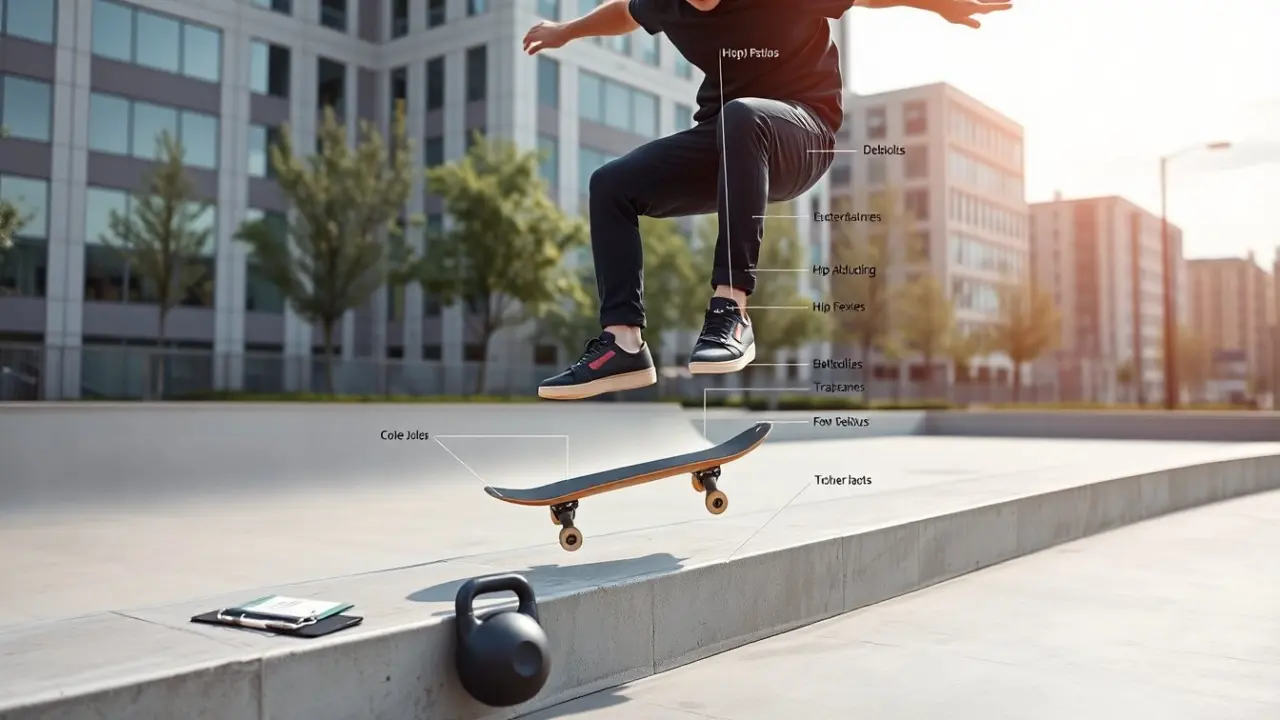
The quadriceps control knee extension. They push the rider forward during a push or an ollie. The glutes extend the hip and provide hip stability. They fire when the rider lands or pops the board.
Skaters who ask “what muscles does skateboarding work” should note that quad strength helps with speed. Strong glutes reduce knee strain and improve jump height. Simple drills such as squats, lunges, and step-ups strengthen these muscles. Skaters can add single-leg versions to mimic the stance on the board.
Core And Hip Muscles That Stabilize Every Trick
The core controls torso position and resists unwanted rotation. The hips drive board direction and support weight shifts. Together they form the primary stabilizers for every trick.
Core subgroups serve specific roles. The rectus abdominis produces forward flexion and helps with small balance corrections. The obliques support rotational moves and quick turns. The transverse abdominis acts like a corset and stabilizes the spine during impacts. The lower back counters forward bending and holds posture during long runs.
Hip abductors and adductors keep the legs aligned. The hip flexors lift the knee for tricks. Strong hips reduce reliance on the knee and ankle. Skaters can train the core with planks, anti-rotation holds, and pallof presses. They can train the hips with clamshells, band walks, and hip thrusts. These drills help explain which muscles skateboarding trains and how to strengthen them for better performance.
Upper‑Body And Arm Engagement: Balance, Pushes, And Falls
The shoulders and arms work during pushing and balance adjustments. They also help protect the body during falls. The upper body does not produce forward thrust, but it helps control motion.
Deltoids and trapezius muscles move and steady the shoulders. The forearms and wrists control the hands during grabs and catches. When a rider pushes off, the arm muscles help maintain speed and rhythm. When a rider lands awkwardly, the shoulder and chest muscles take some load to prevent head injuries.
Skaters wondering “what muscles does skateboarding work” should include upper-body conditioning. Push-ups, rows, and light overhead presses improve shoulder resilience. Wrist-strength exercises reduce the risk of sprains. Training the upper body helps skaters fall safer and recover faster.