ankle mobility exercises help people move with less pain and more power. This guide lists five clear exercises. Each exercise targets ankle range of motion and strength. The steps require little time and no special gear. Readers will learn form, reps, and common errors. The tone stays direct. The instructions suit daily tasks, walking, running, and sport.
Key Takeaways
- Ankle mobility exercises enhance joint motion, reducing stress on knees and hips while improving balance and power.
- Performing five simple exercises like ankle pumps, wall knee-to-wall, and calf raises daily boosts ankle range and strength without special equipment.
- Progress exercises gradually by increasing reps, sets, or adding resistance, always prioritizing controlled movement and avoiding pain.
- Consistent ankle mobility work aids everyday tasks, reduces fatigue, and supports faster recovery after physical activity.
- Seek professional advice if you experience swelling, instability, or persistent sharp pain during or after ankle mobility exercises.
Why Ankle Mobility Matters For Everyday Movement And Sports
Ankle mobility exercises improve joint motion. Better motion lets the foot absorb force. Better absorption reduces stress on the knee and hip. When the ankle moves well, the body balances better. Good balance reduces falls and uneven loading. Athletes gain power from full ankle dorsiflexion during squat and sprint actions. Workers who stand all day feel less fatigue when the ankle moves freely. Pain can decrease when the ankle shares load properly. Limited ankle motion forces other joints to compensate. Compensation leads to overuse and pain. People who add ankle mobility exercises often report easier walking and faster recovery after activity.
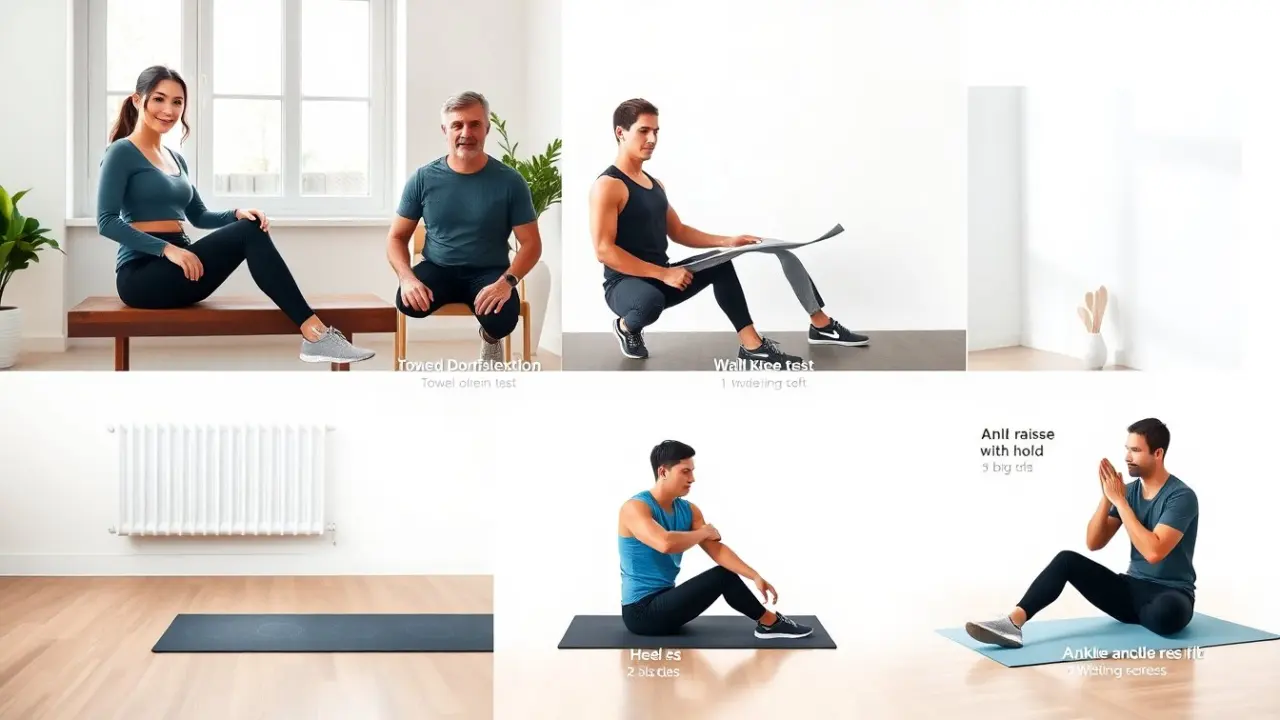
Five Simple Ankle Mobility Exercises You Can Do Anywhere
- Ankle Pumps
They sit or lie down. They point the toes away and then pull the toes toward the shin. They repeat slowly for 20 reps. This exercise improves circulation and basic motion.
- Seated Towel Dorsiflexion
They loop a towel around the foot. They pull the towel toward them while keeping the heel down. They hold for 15 to 30 seconds and repeat 3 times per side. This move increases dorsiflexion range.
- Wall Knee-to-Wall
They stand facing a wall with the foot a few inches away. They bend the knee to touch the wall while keeping the heel down. They move the foot slightly back or forward to find the limit. They do 8 to 12 reps for 3 sets. This drill builds usable ankle motion for squat and lunge patterns.
- Calf Raise with Hold
They stand on a flat surface. They lift the heel and hold for one to two seconds at the top. They lower slowly. They perform 12 to 15 reps for 3 sets. This exercise strengthens the calf and improves ankle control.
- Ankle Circles and Alphabet
They sit with the leg raised. They trace large circles with the foot in each direction for 10 reps. They then draw the alphabet with the big toe. These moves improve joint awareness and multi-directional motion.
Form notes:
They keep movements slow and controlled. They stop if sharp pain appears. They breathe steadily and maintain neutral spine when standing. Progress comes from consistent daily practice rather than heavy loading.
How To Progress, Avoid Setbacks, And When To See A Professional
They increase difficulty by adding reps, sets, or range. For example, they move from seated ankle pumps to loaded calf raises. They add a band for resisted dorsiflexion and plantarflexion. They perform wall knee-to-wall with a small weight or with single-leg stance when they can keep form.
They avoid setbacks by using pain as a guide. If a sharp or burning pain occurs, they stop the exercise. They rest the ankle and reduce load for 48 to 72 hours. They ice for 10 to 15 minutes if swelling appears. They track progress with simple measures. For instance, they measure how many inches the knee reaches toward the wall in the knee-to-wall test. They note changes weekly.
They watch for red flags. If swelling, instability, numbness, or persistent sharp pain appears, they seek evaluation. They consult a physical therapist when progress stalls or when pain limits daily activities. A clinician can assess joint mechanics, joint play, and tendon health. They may prescribe manual therapy, targeted strengthening, or modified activity plans.
They pair ankle mobility exercises with calf stretching and hip activation for best results. They include the exercises in warm-ups before walking, running, or lifting. They perform a short mobility set after long periods of sitting. This habit reduces stiffness and lowers the chance of compensatory movement patterns.