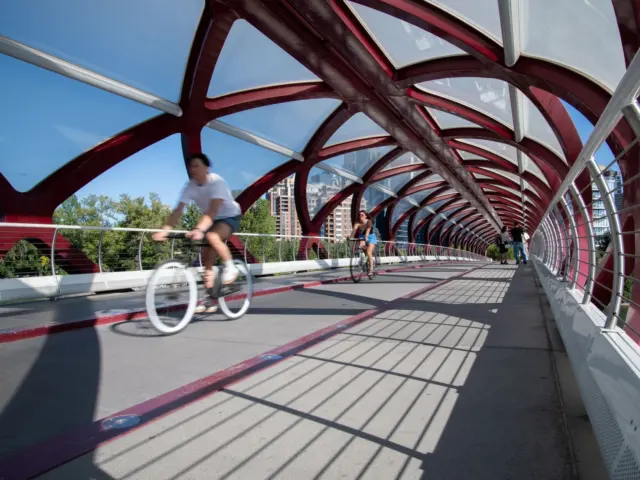
Is Calgary safe? Its crime severity is below Canada’s, but plan your skate day around the route, river conditions and ride home.
Calgary’s 2025 Crime Severity Index was below Canada’s: 61.7 versus 75.0. The figures come from Statistics Canada’s 2025 metropolitan-area comparison. Choose your park, neighbourhood stops and transport with the Calgary guide to organising a skate and outdoor visit, then use the information here to think through the outing and return.
What the crime figures say about Calgary
Calgary’s 2025 Crime Severity Index was below the Canadian figure and below Edmonton, Vancouver and Winnipeg in the same Statistics Canada table. It was above Toronto, Ottawa and Montréal, so the evidence supports a balanced comparison rather than a claim that Calgary is the safest large city.
| Area in Statistics Canada’s 2025 comparison | Crime Severity Index |
|---|---|
| Calgary census metropolitan area | 61.7 |
| Canada | 75.0 |
| Edmonton census metropolitan area | 95.6 |
| Vancouver census metropolitan area | 83.5 |
| Winnipeg census metropolitan area | 113.4 |
| Toronto census metropolitan area | 55.0 |
| Ottawa, Ontario part of the metropolitan area | 50.6 |
The table uses one year and one dataset, released on July 22, 2026. Statistics Canada reports Calgary’s index down 3% from 2024 and Canada’s down 5%. The same table shows Calgary’s police-reported crime rate, which counts incidents without weighting their seriousness, up 5%, so lower severity does not mean fewer reported incidents. Montréal’s 2025 value was 61.3, close to Calgary’s 61.7. Keep the geographic labels in view: the Calgary row covers the census metropolitan area, not one downtown neighbourhood.
Read these as index values, not percentages or personal odds of being a victim. A figure of 61.7 does not mean a 61.7% chance of crime. Nor does a lower overall index establish that every type of incident is lower, or that every route feels equally comfortable at every hour.

Use community data without labelling whole neighbourhoods
Use Calgary Police Service community information to investigate a specific area, not to turn a citywide index into a neighbourhood safety ranking. Start at the CPS Crime Statistics page for the official reports, and the Community Safety Dashboard page for community-level data.
The CPS dashboard announcement describes the Community Safety Dashboard launched in October 2024. Its user overview explains filters for communities, wards and police districts, with data back to 2018 and updates on the fifth of each month. It also provides population-based rates.
Check what the dashboard leaves out before comparing areas. It excludes homicides, shootings and carjackings, while domestic-related crimes are shown only at district or ward level.
Compare the same time period, incident category and geographic level, using either counts or population-based rates consistently.
When choosing a base, combine that information with the practical features in the Calgary neighbourhood comparison for active visitors: the destination you want, your transport connection and the route home.
CTrain safety and your return journey
Plan your ride home before the session starts. The CTrain survey found that many riders felt safe, but others did not.
LiveWire Calgary’s July 2026 report on the transit safety project describes an April survey of 1,627 people interviewed in person. In that survey, 73% felt somewhat or very safe at LRT stations, including 27% who felt very safe; 65% noticed more security staff. These are reported perceptions, not the probability of an incident on your trip.
The same report describes a visible security pilot beginning in January 2026 and peace officers replacing contracted guards at the pilot’s ten stations by June. You cannot count on that pilot providing security at your station or travel time.
Before you leave, save the station name, your destination and a return option you understand. Keep your board controlled and your belongings close. If someone is acting aggressively, give them space and move away rather than trying to intervene or continue an argument.
If you feel uncomfortable, change where you wait or arrange another way back. Use 9-1-1 for an emergency; the contact table below separates urgent help from non-emergency police and City enquiries.
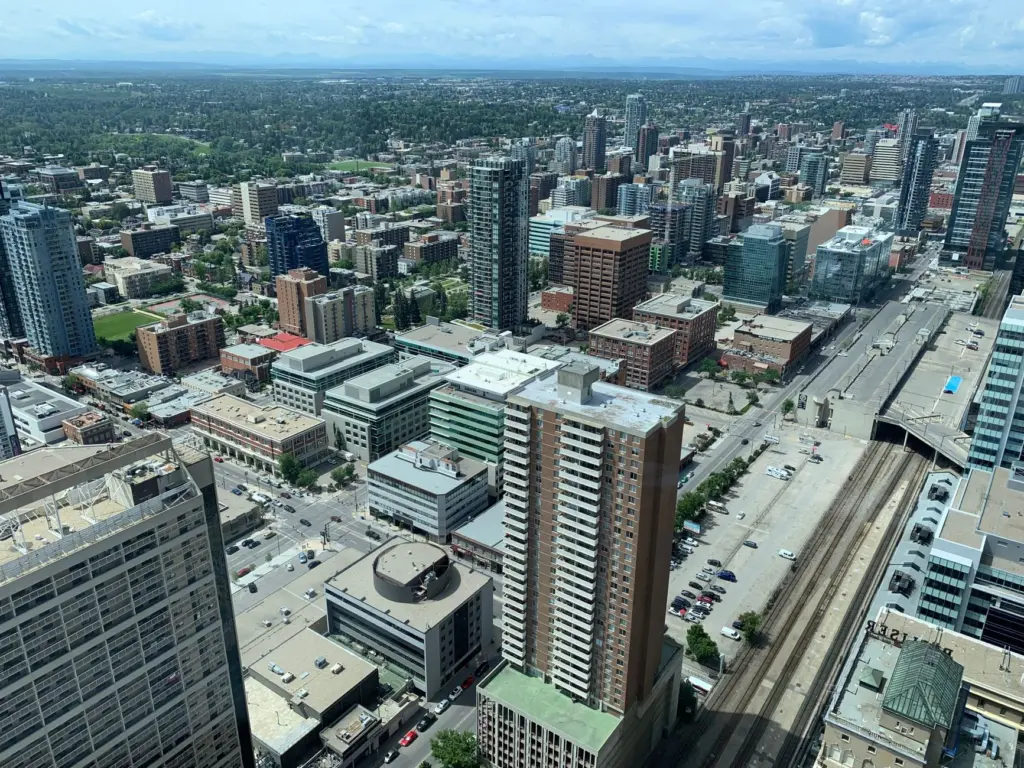
River and pathway safety for an active day
Treat the Bow and Elbow as rivers with changing conditions, even when you are visiting them from a path. The City’s river-access guidance warns that the Bow can be very cold and fast and is generally unsuitable for swimming.
The City identifies June and July as periods when the Bow is higher and faster, and advises checking conditions through Alberta’s river information service. During an advisory, follow the City’s direction to stay off and away from the river. Respect closures and avoid trying to complete a planned route through a flooded or restricted section.
For boating, the City identifies personal flotation devices as a bylaw requirement. Elbow River water-quality advisories are another reason to check current guidance before planning water contact.
If your plan is walking or cruising, keep the water separate from the session: do not chase a board into the river. Stop somewhere clear of other pathway users before checking your phone or changing your route. The Calgary river pathway route and etiquette guide covers route selection and the need to confirm skateboard access.
Share your turnaround and meeting point with anyone joining you. For a skate session, review your skateboard safety gear checklist before heading out and carry the board when a stretch exceeds your confidence.
Cold weather and wildlife deserve a plan too
Cold-weather outings
Dress for the forecast and keep your outing short enough to return comfortably. Stop if you are becoming cold or cannot judge the surface.
Use the Calgary weather guide for seasonal planning to choose your outdoor window, and include a place to warm up on your route.
Wildlife in park settings
Past reporting documents bear warnings and a partial closure after aggressive coyote incidents in Fish Creek Provincial Park. These are historical reports, not active advisories.
Historical coverage includes CTV’s August 2019 report of a Fish Creek bear warning and Global News’s May 2022 coyote-closure report. Alberta Parks’ current Fish Creek pathways guidance says deer and coyotes are common throughout the park, asks you to keep pets on leash and highly recommends carrying bear spray. Follow current park directions and leave wildlife space rather than approaching for a photograph.
Choose your entrance and route into Fish Creek Provincial Park before leaving, and respect restricted areas.

Emergency and non-emergency numbers
Call 9-1-1 for an emergency, 403-266-1234 for non-emergency police matters, and 3-1-1 for City services or bylaw questions.
| Need | Number |
|---|---|
| Emergency help | 9-1-1 |
| Calgary Police Service non-emergency | 403-266-1234 |
| City services and bylaws | 3-1-1, available 24 hours daily |
Conditions, hours and advisories can change; check the relevant official pages before your outing. The numbers are listed in the CPS phone directory and the City’s 311 FAQs. When seeking help, describe where you are as clearly as you can: a named park entrance, street intersection or station is more useful than “near the river.”
For a non-urgent route or bylaw question, prepare the location and activity before contacting 311. For an emergency, use 9-1-1 and follow the call taker’s instructions. Do not delay urgent help while trying to complete your own investigation of what happened.
Frequently asked questions
Is Calgary safer than the Canadian average?
Calgary’s 2025 Crime Severity Index was lower than Canada’s: 61.7 compared with 75.0, according to Statistics Canada. That supports a comparison of the index, not a guarantee about personal safety or every category of crime.
Is Calgary safer than Edmonton?
Calgary had a lower 2025 metropolitan-area Crime Severity Index: 61.7 compared with Edmonton’s 95.6. Keep the year, measure and metropolitan-area boundaries consistent when making that comparison.
Is the CTrain safe to use?
Many surveyed riders felt safe, but experiences varied: 73% in the reported April 2026 survey felt somewhat or very safe at LRT stations. Stay attentive and leave an uncomfortable situation.
Where should you look for neighbourhood crime information?
Start with the CPS Crime Statistics page and the Community Safety Dashboard. Read the category and geographic limitations before comparing areas; the dashboard does not include every type of incident.
Sources
Statistics Canada supplies the comparable crime figures; CPS and City pages supply community-data guidance, river information and contact numbers. The transit survey and historical wildlife examples are explicitly attributed to news reports.
- Statistics Canada: 2025 Crime Severity Index by metropolitan area
- Calgary Police Service: Crime Statistics
- Calgary Police Service: Community Safety Dashboard
- Calgary Police Service: Community Safety Dashboard announcement
- Calgary Police Service: dashboard user overview
- LiveWire Calgary: July 2026 transit safety project and survey report
- City of Calgary: river access and safety guidance
- Government of Alberta: river conditions
- CTV News: August 2019 Fish Creek bear-warning report
- Alberta Parks: Fish Creek pathways and wildlife guidance
- Global News: May 2022 Fish Creek coyote-closure report
- Calgary Police Service: phone directory
- City of Calgary: 311 FAQs