what is a longboard asks many new riders and curious shoppers. The phrase names a skateboard variant that emphasizes stability and distance. It serves commuters, cruisers, and speed riders. This article defines what a longboard is and shows basic uses and differences from a skateboard. It sets simple criteria to help a reader pick the right board in 2026.
Key Takeaways
- A longboard is a type of skateboard designed for stability and distance, making it ideal for commuting, cruising, and downhill speed.
- Longboards feature longer decks, wider trucks, and larger, softer wheels compared to skateboards, enhancing comfort and smoothness on rough pavement.
- Different longboard types, such as cruisers, commuters, downhill, and freeride boards, cater to specific riding styles and goals.
- Choosing the right longboard depends on factors like deck flexibility, truck width, wheel hardness, and intended use, with beginners benefiting from easier balance and experienced riders focusing on control at speed.
- Testing various longboard types and setups helps riders find the best fit for their balance, comfort, and riding objectives in 2026.
What Exactly Is a Longboard? Definitions, Uses, and How It Differs From a Skateboard
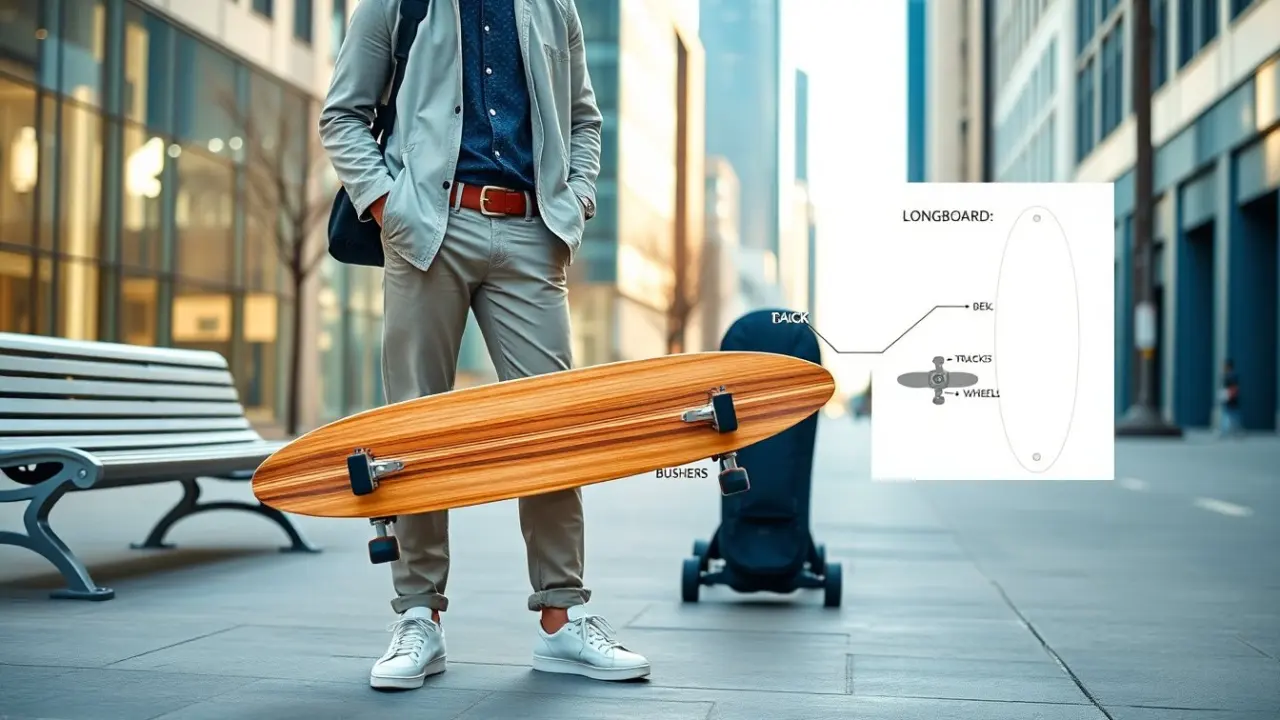
A longboard is a type of skateboard with a longer deck and wider trucks. Riders use it for commuting, carving, cruising, and downhill speed. The design favors stability and smoother rides over tricks. The deck length usually runs from 33 to 60 inches. That length gives more foot room and more leverage for turns.
Longboards differ from skateboards in several clear ways. Skateboards use shorter decks and harder, smaller wheels. Skateboards focus on tricks and park riding. Longboards use larger, softer wheels and longer decks. The trucks on a longboard often have greater turning ability. Riders choose a longboard when they want comfort, distance, or speed control rather than technical trick work.
People ask what a longboard will do for their commute or exercise. The board moves more smoothly on rough pavement. The wheels absorb small bumps. That feature reduces fatigue over longer rides. Beginner riders find longboards easier to balance at low speeds. Experienced riders use longboards for downhill runs and slides.
Key Parts of a Longboard And How Each Affects Ride Feel
The deck sets the board’s shape, length, and flex. A stiff deck gives direct response and faster acceleration. A flexible deck gives a smoother ride and more shock absorption. The deck shape also changes how a rider stands. A drop-through deck lowers the center of gravity. A top-mount deck puts the rider higher for more leverage.
Trucks connect the wheels to the deck. Trucks control turning and stability. Wider trucks add stability and reduce wheel bite. Narrow trucks allow quicker turns. Truck geometry changes how the board pivots. Reverse kingpin trucks sit higher and turn more smoothly. Standard trucks give a more locked feel for tricks.
Wheels affect grip, speed, and vibration. Larger diameter wheels roll over cracks with less speed loss. Softer wheels give more grip and smoother rides. Hard wheels slide more easily and feel faster on smooth surfaces. Wheel durometer and diameter combine to change the ride feel.
Bearings influence how freely the wheels spin. High-quality bearings reduce friction and keep speed longer. Bearings marked with precision ratings usually last longer under heavy use. Riders should clean and replace bearings when they slow down.
Bushings sit in the truck and control the turning resistance. Softer bushings let the truck turn easier. Harder bushings make the truck feel stable at speed. Riders change bushing hardness to tune the turn response.
Common Longboard Types And What Each Is Best For
Longboard types reflect different priorities: comfort, speed, control, and portability. The right type matches a rider’s routine and goals. A commuter will want a different board than a downhill racer. The sections below describe common types and their main strengths.
Cruisers, Pintails, and Commuter Boards — Design And Typical Uses
Cruisers and pintails focus on easy rides and style. A cruiser has a compact deck and a loose feel. A pintail has a tapered shape that reduces wheel bite. Both use softer wheels to smooth rough pavement. Commuter boards favor portability and practical features. They often fold into backpacks or sit on lightweight decks.
These boards suit riders who want a simple ride to work or class. They also suit people who want relaxed weekend rides. The boards perform well at low to moderate speed. They do not suit high-speed downhill runs. Riders who ask what a longboard will do for daily travel often choose a cruiser or commuter for convenience and comfort.
Downhill, Freeride, And Drop-Through Boards — Speed, Stability, And Control
Downhill boards prioritize stability and control at high speed. They use stiff decks, long wheelbases, and low centers of gravity. Riders use them for timed runs and fast descents. Freeride boards focus on sliding and controlled drifts. They often use symmetrical shapes and concave decks for foot placement during slides.
Drop-through boards mount the trucks through the deck. This layout lowers the ride height and increases stability. Riders who want easy pushing and strong braking prefer drop-through boards. The shape and setup reduce the effort to push long distances.
Each board type requires specific setup choices. A downhill rider will use hard wheels and tight trucks for control. A freeride rider will choose softer wheels and looser trucks for slides. A commuter will favor softer wheels and medium trucks for comfort. Riders should test different setups before settling on one.
Shops and local rider groups often let new riders try boards. That practice helps a rider find what fits their balance and goals. People who ask what a longboard suits them should try a few types to see which one feels right.