Matching a deck to a rider improves control and safety, and a skateboard size chart helps by listing common deck widths alongside recommended rider height, foot size, and riding style. The chart simplifies picking a deck whether someone wants a street board, cruiser, or park setup. Below are quick facts to orient a rider before diving into specific size guidance and measuring tips.
Key Takeaways
- A skateboard size chart helps riders select the ideal deck width based on their height, shoe size, and riding style for optimal control and safety.
- Narrow decks (7.5″–7.75″) are best for technical street tricks, while wider decks (8.0″ and up) offer greater stability for cruising and transition skating.
- Choose deck width according to shoe size: add about 0.5″–1.0″ per foot size above US men’s 9 to ensure comfort and balance.
- Measuring your foot size and stance width accurately while wearing skating shoes will help you find a deck that fits naturally and reduces the risk of catching toes on grinds.
- Adjust your skateboard size based on your riding style by subtracting width for street skating or choosing wider boards for park and cruising purposes.
- Always try demo boards when possible, as personal comfort and feel are more important than just following chart measurements.
How Skateboard Size Affects Performance
Wheelbase, deck width, and length each change how a board feels. A narrow deck (7.5″–7.75″) is quicker to flip and better for technical street tricks because it requires less force to spin: but, it can feel twitchy to riders with larger feet. Wider decks (8.0″ and up) provide more stability and landing surface, which helps in pools, ramps, and for riders who favor cruising or transition skating.
Deck length and wheelbase influence turning radius and leverage. A longer wheelbase smooths out turns and increases high-speed stability but reduces nimbleness for tight manuals. Trucks sized to the deck width are important: undersized trucks make carving sloppy, while oversized trucks can slow flip tricks and catch edges.
Grip and stance width matter too. A wider deck gives more room for a natural stance and reduces foot overlap on the rails: that decreases the chance of catching toes on grinds. Conversely, riders who prioritize quick flip tricks will often accept a smaller stance on a narrow deck to reduce rotational inertia.
Common mistakes include choosing a deck purely for style graphics, ignoring truck fit, or failing to account for shoe size. For near-perfect performance, balance deck width, truck width, and wheel size to match the rider’s priorities, control for street, stability for transition, or comfort for cruising.
Skateboard Size Chart By Rider Type, Height, And Riding Style
The table below gives general starting points, individual preference and shoe size will refine the choice.
- Height under 4’10” (147 cm): 7.25″–7.5″ deck, best for children or very small adults: keeps feet centered and reduces board feel.
- Height 4’10″–5’4″ (147–163 cm): 7.5″–7.75″ deck, suits beginners and street skaters who need a balance of flip control and modest stability.
- Height 5’4″–5’9″ (163–175 cm): 7.75″–8.0″ deck, a versatile range for all-around skating: good for parks and mixed terrain.
- Height 5’9″–6’2″ (175–188 cm): 8.0″–8.25″ deck, better for transition, ramp work, and riders with larger shoe sizes.
- Height over 6’2″ (188 cm+): 8.25″+ deck, maximum stability for big stance and high-speed riding.
Riding style adjustments:
- Street/Technical: subtract ~0.25″ from the middle of the recommended range for quicker flips.
- Park/Transition: choose the middle to upper range for better landings and balance.
- Cruising/Commuting: wider or longboard-style decks are preferable: wheel size and softer wheels improve comfort.
Shoe size rule of thumb: allow ~0.5″–1.0″ of deck width per foot beyond a US men’s 9. For example, someone with size 11 shoes will often be more comfortable on an 8.0″–8.25″ deck. These guidelines are starting points, riders should experiment at a skate shop or with rental/demo boards when possible. Deck width and shoe size together are the most reliable predictors of comfort.
How To Measure Your Feet, Stance, And Deck For The Right Fit
Measuring is straightforward and removes guesswork. To measure foot size, stand with full weight on a piece of paper, trace the outline, and measure the longest length from heel to toe in inches or centimeters, then convert to the standard shoe size charts if needed. For width, measure across the widest part of the traced foot. Foot width can push a rider toward a wider deck even if height suggests otherwise.
To estimate stance width, have the rider stand naturally and mark the positions of each foot on the floor while resting as they would when riding. Measure the distance between the centers of those marks, this is the stance width and should roughly match the deck’s usable platform. If the stance feels cramped on a chosen deck, move up 0.25″–0.5″ in width.
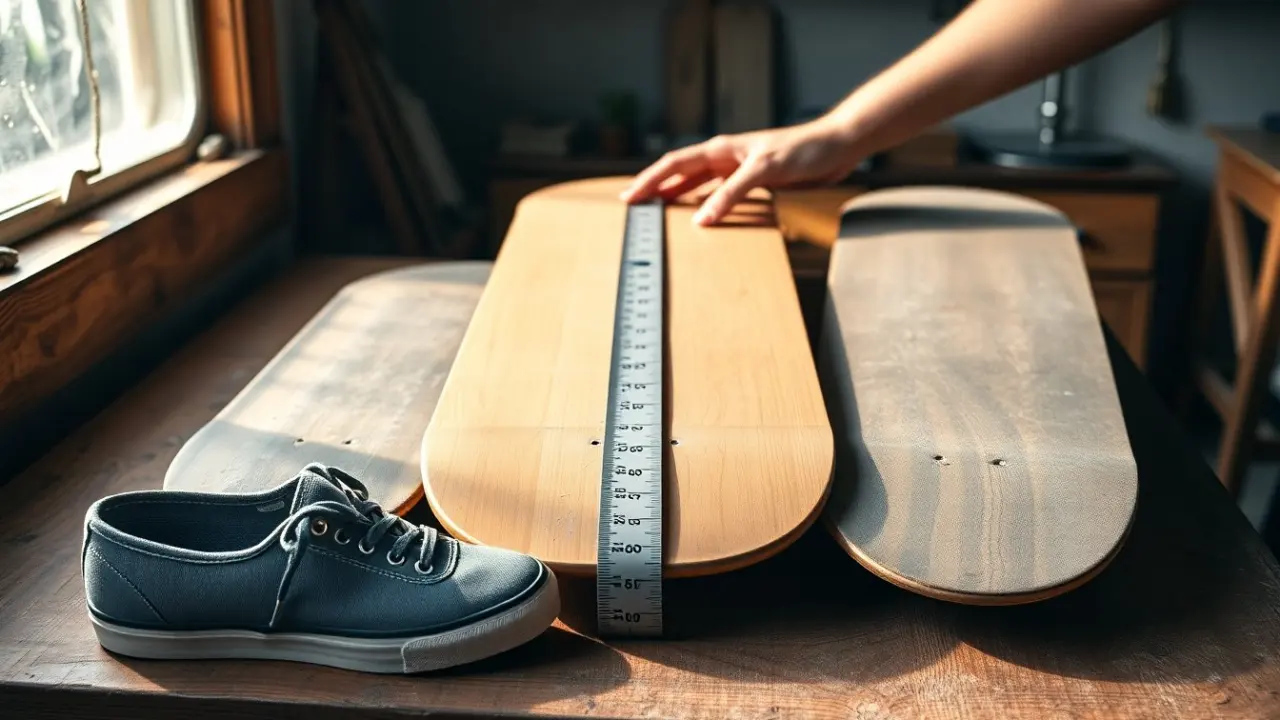
To measure an existing deck, lay a tape measure across the top at the widest point for width, measure nose-to-tail for length, and measure the distance between truck mounting holes for wheelbase. Match these numbers against the rider’s measurements: if the deck width is less than the foot width plus a small margin, it will feel tight and may hinder balance.
Common measurement errors: tracing with an unweighted foot, ignoring shoe thickness, or using a rounded tape that adds slack. For the most accurate fit, measure while wearing the shoes intended for skating and stand with normal posture. When in doubt, prioritize one quarter-inch to a half-inch extra width for comfort and landing security. Bold one final tip: try before buying when possible, feel beats numbers.
Skateboard Size Chart: Frequently Asked Questions
What skateboard deck width is best for riders under 4’10”?
For riders under 4’10” (147 cm), a deck width between 7.25″ and 7.5″ is recommended. This size keeps feet centered and reduces the board’s feel, ideal for children or very small adults.
How does skateboard deck width affect performance for street skating?
Narrow decks (7.5″–7.75″) are better for technical street tricks because they flip quicker and require less force. However, they provide less stability, making them less ideal for riders with larger feet.
What factors besides height should I consider when choosing a skateboard size?
In addition to height, consider shoe size, riding style, and stance width. A wider deck may be necessary if you have larger feet or a wider stance, and riding style influences deck width for control or stability.
How can I measure my feet and stance correctly to pick the right skateboard size?
Trace your foot while standing with full weight on paper, then measure length and width wearing your skating shoes. Mark your natural stance on the floor and measure the distance between feet to match deck width with your stance comfortably.
Why is matching truck size to deck width important?
Proper truck size ensures better control; undersized trucks cause sloppy carving, while oversized trucks can hinder flip tricks and cause the board to catch edges, negatively affecting performance.
What skateboard deck width suits a rider over 6’2″ for cruising or commuting?
Riders over 6’2″ should choose decks 8.25″ or wider for maximum stability. For cruising or commuting, wider or longboard-style decks with larger, softer wheels improve comfort and ride smoothness.