Skaters want the most comfortable skate shoes for long sessions and tricks. This guide compares padding, fit, and boardfeel in detail so you can decide which features matter most for the way you ride. It lists top models in 2026 with notes on who each suits best and gives clear fit, break-in, and care tips you can use right away. Readers will learn how midsole construction, last shape, upper materials, and lacing systems affect comfort and control. The article helps you pick shoes that protect feet, maintain boardfeel, and reduce fatigue during long sessions.
Key Takeaways
- The most comfortable skate shoes combine cushioning, support, and boardfeel to reduce foot fatigue and improve performance.
- Different styles of skating require different shoe features: street skaters benefit from slim soles and flexible toe areas, park skaters need extra heel cushioning and impact protection, and casual riders prioritize breathability and everyday comfort.
- Top models in 2026 offer varied designs like dual-density midsoles, molded plates, and hybrid soles to enhance comfort and control; pick the features that match how and where you skate.
- Testing shoes with your usual skating socks and prioritizing fit over appearance ensures maximum comfort and board control; try moves that mimic your typical tricks before buying.
- Regular care such as breaking in gradually, rotating pairs, cleaning properly, and replacing insoles helps maintain the comfort of your skate shoes over time and preserves cushioning and fit.
What Makes A Skate Shoe Comfortable?
Comfort in skate shoes comes from design choices that reduce pain and improve performance. Cushioning, support, and impact protection lower foot fatigue and reduce injury risk. Fit, flex, and boardfeel let a rider control the board without losing comfort. Materials and construction affect breathability and durability. A balanced shoe gives shock absorption, foot hold, and enough sole feel for pop and flick.
Key components that define comfort:
- Midsole construction: dual-density foams or visible cushioning in the heel provide shock absorption for landings while a firmer forefoot preserves boardfeel.
- Insole and footbed: contoured or removable insoles improve arch support and can be swapped for custom orthotics to match foot shape.
- Last and fit: a last that matches your foot width and toe shape prevents pressure points; heel cups that lock the heel down reduce slippage and blistering.
- Upper materials and reinforcements: suede and leather offer durability and form to the foot, while engineered knits increase breathability; durable toe caps and single- or double-stitched panels add protection where needed.
- Outsole and flexibility: vulcanized soles typically offer better boardfeel and flexibility, while cupsoles or hybrid soles provide more cushioning and support—choose based on whether you prioritize flick or impact protection.
Understanding trade-offs is essential: the most comfortable skate shoes for a heavy-impact park skater may not be ideal for a technical street skater who needs maximum pop. Comfort is a mix of protective features and an unimpeded connection to the deck.
Top 5 Most Comfortable Skate Shoes Right Now
- Brand A Elite Low — Uses a dual-density midsole and padded collar. Offers superior shock absorption on landings while maintaining a relatively low profile for boardfeel. Best for skaters who drop in and do repetitive transitions but still need responsive flick.
- Brand B Classic Pro — Slim vulcanized sole with a cushioned removable insole. Excellent boardfeel for technical street tricks while providing targeted cushioning where riders need it most. Good choice if you switch between ledges and flatground.
- Brand C Runner SKT — Knit upper paired with a foam heel cup for breathability and support. The knit molds to the foot for reduced pressure points and the structured heel keeps the foot secure during rotations.
- Brand D Impact Plus — Adds a molded midsole plate and reinforced toe area for repeated high-impact landings. Heavier than vulcanized shoes but designed to protect the foot on drops and big gaps without excessive loss of boardfeel.
- Brand E Vulc-Ride — Hybrid sole that mixes a flexible vulcanized forefoot with a cushioned rear cupsole. Delivers a compromise between flick and impact protection, making it a versatile, all-day comfortable option.
Each model earns a spot among the most comfortable skate shoes for specific needs: street, park, or casual sessions. When comparing models, look at where cushioning is located (heel vs forefoot), whether the insole is removable for aftermarket support, and how the shoe locks the heel and wraps the midfoot.
How To Choose The Right Comfortable Skate Shoe For Your Foot And Riding Style
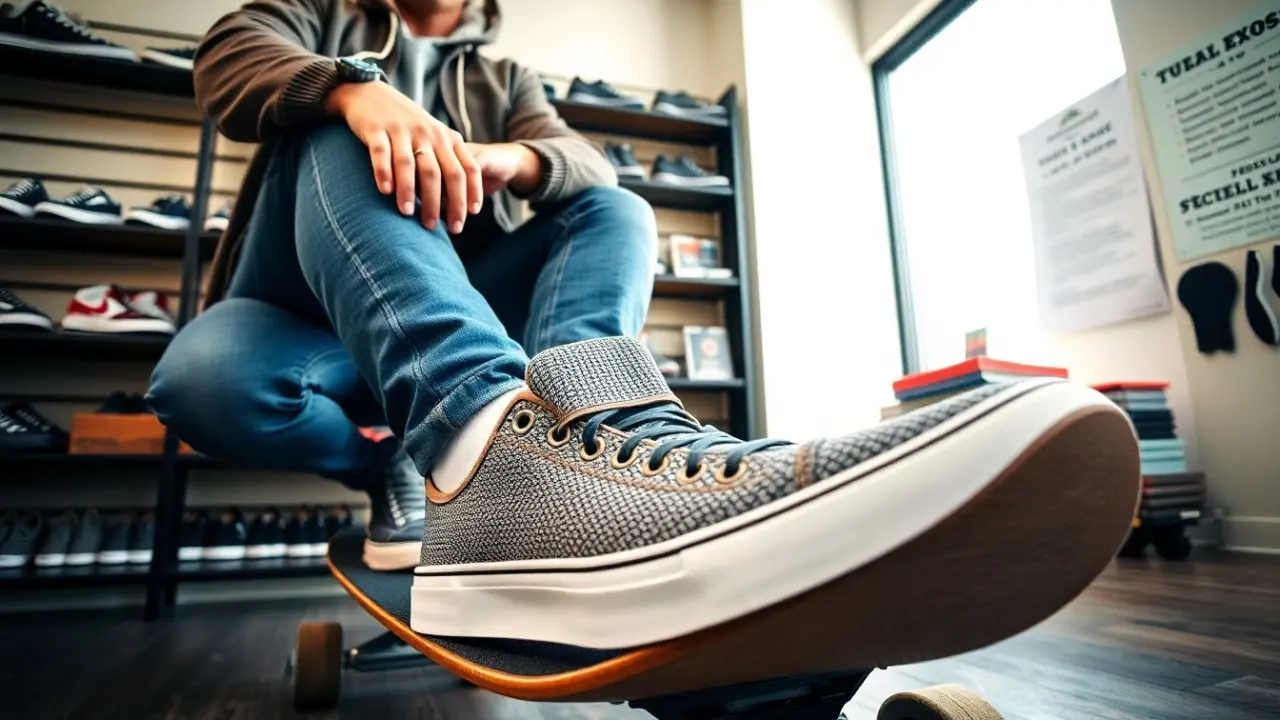
Riders should match shoe features to their style. Street skaters need boardfeel and slim soles. Park skaters need cushion for high drops. Casual riders often want breathability and everyday comfort. Test shoes with the same socks you will wear on the board. Move around in the shop or on a flat surface to check fit and flex. Prioritize fit over looks. The right choice gives comfort and control at once.
Practical selection checklist:
- Measure both feet and try the shoe at the end of the day when feet are slightly swollen to avoid buying too-tight sizes.
- Try the shoes with your skating socks and lace them the way you normally skate—different lacing methods change fit and heel lock.
- Perform brief skating motions if possible (snapping the board, rolling off a curb) to feel how the sole transmits feedback. If you rely on flip tricks, prioritize forefoot sensitivity.
- Consider foot shape: wide feet need a roomier last, high arches may benefit from contoured insoles, and flat feet often feel better with firmer arch support.
- Think about durability vs. comfort: heavier protective features add weight but can prevent painful wear spots and prolong a comfortable fit over time.
Also consider underfoot technologies: if a shoe offers a removable insole, you can customize support later; if it uses molded plates, expect more stable landings. Match those attributes to how you skate and how long you typically ride in a session to find the most comfortable skate shoes for your needs.
Breaking In And Caring For Comfort: Tips To Keep Shoes Feeling Soft Longer
Break in shoes with short sessions and progressive intensity. Heat and heavy use speed wear and reduce cushion life. Rotate between two pairs to extend midsole life and preserve cushioning. Clean shoes with mild soap and air dry. Replace insoles when they flatten to restore shock absorption. Re-glue loose soles and repair or replace worn outsole areas before they affect support. These steps keep the most comfortable skate shoes performing well and feeling softer over more sessions.
Detailed care and break-in plan:
- Initial break-in: wear new shoes for 30–60 minute sessions the first week, gradually increasing duration and intensity. This lets the upper conform to your foot and the midsole settle without prematurely compressing cushioning.
- Rotation: alternate between two pairs if you skate frequently—this allows midsoles to decompress and prolongs overall cushioning life.
- Cleaning: remove insoles to air them out after sessions. Wipe the upper with a soft brush and mild soap; avoid machine washing which can degrade adhesives and foam. Stuff shoes with newspaper to absorb moisture and maintain shape while drying.
- Insole care and replacement: swap insoles when you notice loss of arch support or cushioning. Aftermarket insoles can restore comfort and address specific foot issues without changing shoes.
- Small repairs: re-glue lifting soles and patch worn toe areas quickly to avoid structural damage that affects fit and protection. Addressing minor wear extends the life of the cushioning system.
- Storage: keep shoes in a cool, dry place away from direct heat or sunlight, which can harden foam and cause premature breakdown of materials.
Use these steps to preserve the features that make a shoe one of the most comfortable skate shoes: proper break-in, regular rotation, timely maintenance, and replacement of consumable parts like insoles and laces. Comfort is not only built into the design but also maintained by how you care for the shoe throughout its life.