The best skate shoes matter to every rider who wants comfort and board control. This guide lists the best skate shoes for 2026 and explains why each shoe ranks high. It shows fit notes, key materials, and expected lifespan. Readers get clear advice to pick shoes that match their style and budget. Below we expand on how models were evaluated, what to expect from a top pick and a value pick, and practical fit and care steps that help each pair last longer on real street and park terrain.
Key Takeaways
- The best skate shoes combine grip, cushioning, and durability to enhance comfort and board control for riders.
- Top skate shoes often feature vulcanized rubber soles and reinforced toe panels for steady grip and abrasion resistance.
- Budget skate shoes provide reliable performance with cupsole construction and suede uppers, ideal for beginners or casual skaters.
- Proper fit and sizing tailored to foot width and heel slip are crucial for comfort and performance in skate shoes.
- Regular care like gentle cleaning, avoiding heat drying, and rotating shoe pairs extends the lifespan of skate shoes.
- Choosing the best skate shoes depends on individual riding style, budget, and preference for immediate board feel or durability.
How We Picked The Best Skate Shoes
To assemble this list of the best skate shoes we combined hands-on testing with condition-controlled wear checks and user feedback. Testers rode dozens of models across street spots, ledges, stairs, and transition lines to gauge board feel, grip, and protection during common maneuvers—ollies, flip tricks, grinds, and big-impact landings. We timed visible sole wear and seam failure across comparable mileage and noted how materials performed in wet vs dry conditions.
We evaluated three core areas: outsole traction and pattern longevity; upper abrasion resistance and reinforcement placement; and midsole cushioning and energy return. Each shoe was also checked for construction details that affect repairability—stitched overlays, glued seams, replaceable insoles, and manufacturer support. Price was weighed against these factors to highlight true value rather than just the lowest cost. Finally, we cross-referenced public reviews and retailer return data to spot recurring fit or durability issues, ensuring recommendations reflect both lab-style testing and long-term rider experience.
Best Overall Skate Shoe (Top Pick For Most Riders)
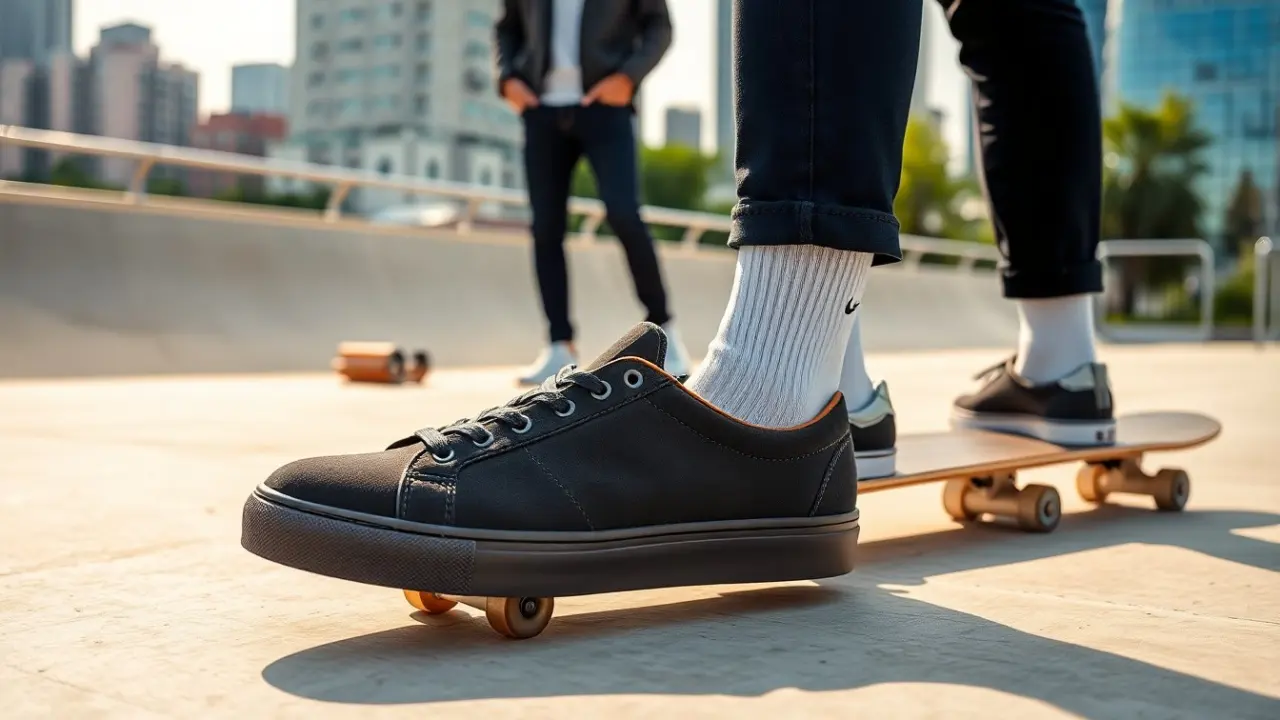
This shoe earns the top spot as the best skate shoes for riders who want balance of grip, cushioning, and durability. It blends the immediate board feel of a vulcanized sole with the impact protection of a thin cup overlay, creating a responsive platform that still absorbs hard landings. The upper combines abrasion-resistant suede in high-wear zones with microfiber panels where flexibility matters, and reinforced toe caps extend the life in the area that takes the most friction.
Beyond materials, the design prioritizes board control: a low-to-mid profile that keeps your center of gravity close to the deck, a predictable tread pattern that stays tacky after repeated use, and a midsole stack that smooths repeated impacts without deadening flip tricks. Small details—like a gusseted tongue to keep grip tape bits out, a secure lace box to prevent lace chewing, and multiple width options—make it a practical year-round choice for skaters who skate both spots and park sessions.
Why It Stands Out
The shoe stands out for steady grip and minimal break-in time. Its vulcanized compound is formulated to retain tack under abuse, and the cup overlay reduces midsole deformation that can lead to early delamination. The upper uses targeted reinforcements—double-stitched foxing, toe and heel overlays, and a scuff-resistant coating on the most exposed seams—so the shoe resists the typical “run through” at the toe box longer than many competitors.
Comfort-wise, the midfoot contains a thin EVA insert that balances cushioning and board feel; the collar uses low-profile padding to stabilize the ankle without bulk. Pro-level features such as replaceable insoles and a lined tongue (to reduce lace chew) are reasons why local skaters and some sponsored riders consistently rotate this model into their quiver. Overall, it’s the best skate shoes choice for riders who want durable, versatile performance without sacrificing flick and feedback.
Best For (Who Should Buy It)
Street riders who land flip tricks and gaps should choose this shoe for its balance of low-profile feel and added protection. Park skaters who value quick flicks and stable landings will benefit from the predictable sole and moderate cushioning. Riders who hate long break-in periods will like the immediate board feel and minimal stretch in the upper. It also works well as an all-day skate shoe for commuters who want protection during repeated impacts.
Fit notes: the shoe fits average to wide feet comfortably; narrow-footed riders often prefer a half-size down or a thinner sock for a more locked-in fit. If you change brands often, test these at the end of the day when feet are slightly swollen to ensure no uncomfortable squeeze during long sessions.
Best Budget Skate Shoe (Top Value Pick)
This budget shoe makes the list as one of the best skate shoes for riders who want price and basic performance. It uses a cupsole construction that gives stronger structural support than some entry-level vulcanized models, with a suede upper in high-wear areas for a good balance of grip and durability. The outsole pattern is designed to provide consistent traction on griptape while spreading abrasion so it doesn’t wear through a single area instantly.
Because it targets value, the padding is lighter and the midsole stack thinner than premium models—this reduces weight and cost but also means repeated high-impact sessions will transmit more shock. Still, for beginners, casual skaters, or those who change shoes often for style, this shoe delivers predictable performance at a low price point. Construction is straightforward, which helps with in-field repairs like re-gluing a separated foxing or replacing worn laces.
Performance Tradeoffs And Who It’s For
The budget shoe gives up advanced cushioning systems and some abrasion-resisting reinforcements in order to keep cost down. Expect faster sole wear under constant hard use and slightly less precise flick compared with a vulcanized/top-pick hybrid. However, the tradeoffs are sensible for learners: the stiffer cupsole can feel a bit more stable for landings, and the suede upper scuffs in a way that still preserves traction.
Who should consider this model: new skaters practicing basics, park users who skate casually, or anyone wanting a dependable backup pair. It’s also ideal for riders on a tight budget who want to experience different silhouettes and colors before committing to a higher-priced performance shoe. If you plan to skate daily and hit heavy impact spots, factor in a slightly shorter replacement cycle.
Fit, Sizing, And Care Tips For Longevity
Riders should measure foot length and try the shoes with the socks they normally skate in. When testing fit in-store, perform a short “stand-and-bend” test—squat and toe the board movement with the shoes on to check for heel slip, forefoot width, and comfortable toe space. Check for pressure points along seam lines and under the insole; any persistent hotspots will show up after 10–15 minutes of skating. If a brand runs wide, size down by a half; if it runs small, size up. Keep in mind different lasts can change fit even within the same brand.
Break-in tips: start with short sessions to let the upper form to your foot and to seed any weak points early. Use thicker socks for the first few sessions if you want a snug feel, then switch to thinner socks as the shoe loosens. To protect the toe box, consider applying a thin self-adhesive scuff guard or reinforcing tape when you first notice wear; this spreads abrasion and can delay a run-through.
Cleaning and maintenance: clean suede with a soft nylon brush and a suede eraser for scuffs; treat canvas or textile panels with a mild soap-and-water solution and a soft cloth. Remove insoles to air them out and allow shoes to dry naturally—avoid direct heat sources that warp glue and foam. Rotate between two pairs when possible to let adhesives and cushioning decompress between sessions. For glued foxings that begin to separate, a skate-specific shoe glue applied carefully along the seam can extend life; stitched panels are easier to repair by a cobbler.
Lacing and insole choices also affect longevity and performance. Proper lacing pattern reduces toe stress and prevents laces from getting chewed; use lace protectors or double-knotting to keep laces secure. Consider swapping in a thin performance insole for extra heel stability without sacrificing board feel. Regularly inspect soles for tread polish—when the tread becomes flat and slick, grip and control suffer, signaling it’s time for replacement.
By matching your riding style (street vs park vs transition), foot shape, and maintenance routine with the strengths of each model, you’ll get the most out of the best skate shoes for your needs. Small, regular care steps and realistic expectations about replacement frequency will keep you skating longer with fewer interruptions due to gear failure.