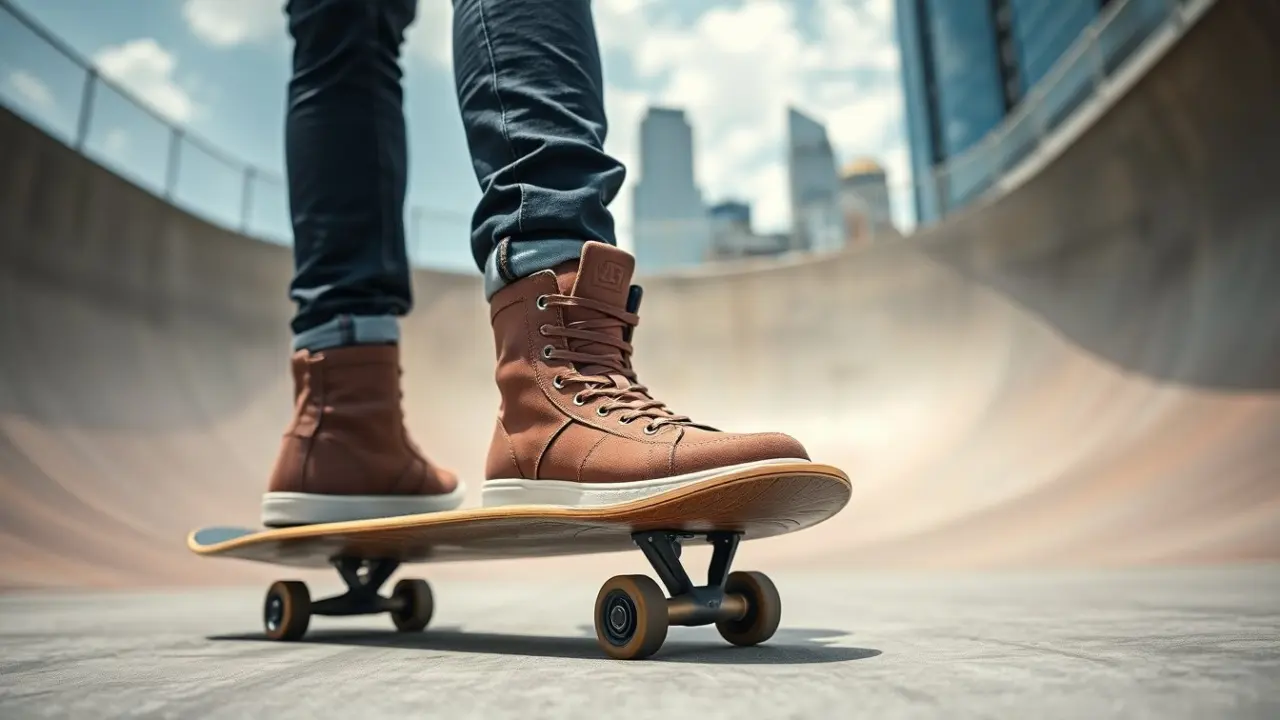
High top skate shoes help protect the ankle and provide board feel. This guide shows what buyers need to know about fit, grip, materials, and care. It helps riders pick high top skate shoes that match their goals and style, whether they ride transition, bowls, vert, or prefer a mixed approach that combines street tricks with ramp work. Use the sections below to weigh trade-offs, spot construction details that matter, and follow practical break-in and maintenance steps that extend the life of your high-tops.
Key Takeaways
- High top skate shoes provide crucial ankle support and protection, making them ideal for skaters focusing on transition, bowl, and vert styles.
- Choosing the right high top skate shoes involves balancing ankle support, grip, cushioning, and durability to fit your skating needs.
- Materials like leather and suede enhance abrasion resistance, while reinforced stitching and quality glue increase shoe longevity.
- Fit is essential: try high top skate shoes later in the day with the socks you’ll wear and ensure a snug fit without pinching.
- Break in your high top skate shoes gradually and maintain them by cleaning soles and monitoring wear to know when replacement is necessary.
Why Choose High-Top Skate Shoes? Benefits, Trade-Offs, And Who They’re For
High top skate shoes offer ankle support and added protection. Many skaters choose them after ankle injury or to reduce roll risk. High top skate shoes also change the board feel and the weight of the shoe. Some riders like the stability: others find the shoe limits ankle flick on flip tricks. High top skate shoes work well for transition, bowl, and vert skaters because the higher collar helps resist unwanted ankle movement during landings and grinds. They also help prevent abrasion and impact injuries on lip hits or deep carving sessions.
There are trade-offs to consider. High-tops typically add a bit of mass and can reduce tactile board feedback compared with low-cut shoes, which matters for technical flip tricks and fast flicks. That said, modern designs try to balance support and responsiveness with thinner midsoles or cutaway collars to keep board feel. For street skaters who favor lightweight, minimal shoes, a mid-top or reinforced low-top may be preferable. For beginners, a high-top can build confidence and protect developing ankles. For experienced skaters moving into larger transitions or higher drops, high top skate shoes can be a useful part of a protective setup.
Who they’re for: prioritize high top skate shoes if you skate pools, bowls, ramps, or do a lot of transition work; if you recover from ankle injuries; or if you want durable, protective footwear. Consider alternatives if your core discipline is technical street tricks that rely heavily on a subtle flick and maximum board feel.
Key Features To Look For In High-Top Skate Shoes
Skaters should inspect several features before they buy high top skate shoes. The right mix of support, grip, and durability makes the shoe perform on concrete and ramps. The section below breaks down the most important points for buyers of high top skate shoes, with practical signs to look for in the store and during first rides.
Ankle Support, Fit, And Closure Systems
Ankle padding must hold the foot without crushing it. Buyers should check internal padding and collar height in any high top skate shoes. A snug heel prevents lift and reduces blisters. Lace systems affect fit and lockdown. Some models add straps or gussets for extra hold. High top skate shoes with flexible collars let the ankle move while still offering support. Shoppers should try shoes with socks they plan to wear to test real fit.
Practical checks in-store: lace the shoes up fully and stand on the board or a raised surface to feel heel lock and ankle support; press around the collar to assess padding thickness and comfort; bend the shoe to judge how much ankle range it allows—too stiff and you’ll lose mobility, too floppy and the protective benefits shrink. Consider models with removable insoles if you want to swap in a cushioned or orthotic insert that improves comfort without compromising lockdown.
Sole Grip, Cushioning, And Durability Factors
Outsole rubber determines grip and board feel for high top skate shoes. A grippy rubber compound improves control on decks. Midsole cushioning affects impact protection. Thicker foam protects landings but can reduce board feedback. Durability comes from reinforcement at the toe and sidewalls. Double-stitched panels and toe caps extend shoe life. Buyers should balance grip, cushioning, and durability when picking high top skate shoes to match their skating style.
Look for structured sole patterns and rubber compounds designed for abrasion resistance if you do a lot of ledge work. If you ride transition, prioritize cushioning and impact-absorbing midsoles (look for visible foam types or manufacturer descriptions such as EVA or PU layers). For street-oriented durability, reinforced toe caps and added sidewall rubber patches can dramatically extend the shoe’s usable life. Test the sole flexibility—too rigid can deaden board feel, too soft can wear quickly; a medium flex often suits skaters who mix street and ramp sessions.
Materials And Construction That Affect Performance And Longevity
Leather and suede offer abrasion resistance for high top skate shoes. Canvas provides breathability but wears faster on hard use. Reinforced stitching at stress points slows tearing. Heat-pressed seams reduce bulk and keep flex zones clear. Glue quality matters: weak glue leads to sole separation. Some brands use molded ankle cups for consistent support. Buyers should prefer materials that match their wear pattern. If a rider skates ledges, they should choose high top skate shoes with strong suede and reinforced toes.
Material trade-offs: full-grain leather tends to be heavy but highly durable and water resistant; suede balances grip and abrasion resistance while conforming nicely to the foot; synthetic leathers and textile blends can cut weight and cost but may wear faster in high-abrasion zones. Check stitching density and whether the shoe uses taped or glued reinforcements along the midsole—these details indicate how likely the shoe is to survive repetitive ollies and grinds. Also inspect the insole construction and whether the midsole is unitary or has separate cushioning pods—these choices affect long-term comfort and how the shoe responds to impact.
How To Choose The Right Size, Break-In Properly, And Care For Your High-Tops
Buyers should measure both feet and try shoes later in the day when feet swell. They should choose high top skate shoes that fit snugly without pinching. A slight heel slip is acceptable early but should not cause instability. They should test the shoe with a short skate session or push on the board in the store.
Break-In Tips, Maintenance, And When To Replace Your Shoes
To break in high top skate shoes, the rider should wear them for short sessions and increase time gradually. They should avoid heat sources that warp glue. For maintenance, the rider should clean soles and remove grit from stitching. They should reapply sole grip treatments only if the product recommends it. Riders should replace high top skate shoes when the sole detaches, cushioning collapses, or support fails. Worn soles and exposed midsole foam signal the end of useful life for high top skate shoes.
Detailed break-in and care routine: start with walking and short pushing sessions for the first few outings, then add tricks once the collar and insole begin to conform. Use a soft brush to clear dirt from the tread after each session and mild soap with a damp cloth for surface cleaning—avoid saturating suede. For suede high-tops, use a suede brush and eraser to lift nap and remove scuff marks; for leather, a light conditioner can maintain suppleness but don’t over-apply near glue lines. If laces or insoles wear out, replace them promptly—fresh laces improve lockdown and new insoles can restore cushioning without replacing the whole shoe.
Replacement cues: when heel lock is lost, ankle padding compresses, or the outsole has deep wear exposing the midsole, it’s time to retire the pair. Regularly rotate shoes if you skate daily to allow glue and cushioning to recover between sessions; this simple step can extend the usable life of your high top skate shoes and keep performance consistent.