easy skateboard tricks help new riders build skill and confidence quickly. This guide gives clear steps for five easy skateboard tricks. It covers safety, stance, and board setup. It shows how to ollie, practice manuals, and lock into a 50-50 grind. The instructions use simple steps and common corrections. Riders can follow the drills in short practice sessions.
Key Takeaways
- Easy skateboard tricks build skill and confidence quickly through simple, clear steps focused on safety and board setup.
- Mastering the ollie, the foundational trick, requires a smooth pop and slide motion to level the board in midair.
- Practicing manuals improves balance and control by shifting weight and lifting the front wheels for short holds that increase over time.
- The 50-50 grind on low ledges demands even weight distribution and commitment to locking in for a clean ride and smooth exit.
- Wearing proper protective gear and adjusting truck tightness enhances safety and performance when practicing easy skateboard tricks.
Essential Safety, Stance, And Board Setup
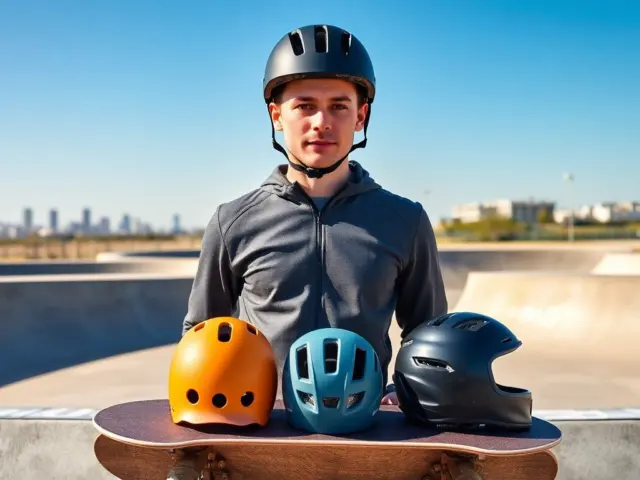
Skaters must wear a helmet, wrist guards, knee pads, and elbow pads. Parents should check fit and straps. They should inspect the deck, trucks, and wheels before each session.
Rider should set truck tightness to match comfort. Tight trucks help carving and balance. Loose trucks help turning but reduce stability for tricks. Rider should stand with front foot near the front bolts and back foot on the tail. This stance gives control for pops and manuals.
Skaters should set shoe laces tight and choose flat-soled shoes. Flat soles give consistent contact with the deck. Rider should wax the ledge for grinds and clean the bearings if wheels feel slow.
Beginner drills: push for 30 seconds, stop with foot brake, then push again. Repeat until balance feels steady. These drills prepare the body for easy skateboard tricks and reduce falls.
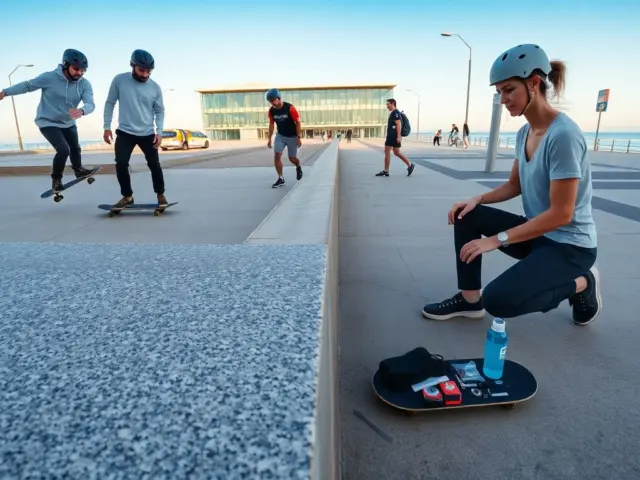
Added checklist before each session: quick truck check (hand-tighten kingpin nut if loose), deck inspection for cracks, wheel spin test to catch gummy bearings, and a short warm-up of ankle circles and light jogging to raise blood flow. A routine like this reduces minor equipment failures and makes it easier to focus on skill work.
Common beginner mistakes: standing too rigid, looking at your feet, and gripping the board with toes. Correct these by keeping knees soft, eyes forward, and feet relaxed. For younger riders, shorter practice blocks (10–15 minutes) with frequent breaks limit fatigue and help solidify technique for the easy skateboard tricks covered here.
Ollie Fundamentals: Step-By-Step For Your First Pop
The ollie is the base for many easy skateboard tricks. Rider should stand with the front foot angled and the back foot on the tail. Rider should crouch, then jump while snapping the tail down with the back foot. Rider must drag the front foot up the deck to level the board in midair.
Practice on soft grass or carpet first. This surface prevents wheel roll and helps focus on foot motion. Start with small pops, then increase height. Rider should keep shoulders aligned with the board.
Key cues: snap the tail, slide the front foot, lift knees. These three actions create a clean ollie. Use slow-motion practice and repeat 20 times per session. The ollie appears in many easy skateboard tricks, so mastering it speeds progress.
Timing tip: the pop and the slide must happen in one fluid motion. Rider should avoid pausing between snap and slide. Smooth motion helps the board rise evenly.
Drills to accelerate learning: 1) Stationary pops on a carpeted area, focusing only on the snap and catching the board with both feet; 2) One-foot ollies (keep back foot on the tail and practice popping while the front foot slides later) to isolate each movement; 3) Ollie onto a low object (a phone book or small riser) once comfortable with height. For each drill, track reps and aim for consistency before increasing difficulty.
Common errors and fixes: if the tail drags, push harder with the back foot and bend the knee more; if the board spins, check foot placement and keep shoulders parallel to the deck; if the front foot misses the slide, practice dragging the sole flat up the grip tape rather than using the toe. Incorporating these corrections makes the ollie a reliable tool for other easy skateboard tricks.
Manual (Wheelie) Basics: Balance Drills And Progressions
The manual tests balance and control. Rider should start rolling at a slow, steady speed. Rider should shift weight to the back foot and lift the front wheels. Keep knees bent and arms out for balance.
Begin with short holds of one to two seconds. Repeat holds ten times. Increase hold time gradually. Use a flat, smooth surface for practice. If the nose drops, rider should move weight slightly forward. If the tail drops, rider should move weight back.
Drills: ride with one foot on the tail and one foot over the bolts. Practice lifting the front wheels and holding. Then try short manuals across a driveway. Add a small push before the lift to build momentum.
Progressions: ride manuals over lines or small curbs. Combine manuals with small turns to gain board control. The manual appears in many easy skateboard tricks as a linking move, so riders should practice it often.
Additional tips: use visual markers on the ground to practice holding the manual to a given point, and use a partner or a low fence for initial support while learning balance. For reducing nose-drops, try slightly tightening the front truck to give a more predictable pivot. For building endurance, practice a ladder: 5 holds of 2 seconds, 4 holds of 3 seconds, 3 holds of 4 seconds, with rest between sets.
Safety note: when first attempting longer manuals, pick a low-traffic area and wear full protective gear. Falling backward is common; learn how to bail safely by stepping off toward the back or rolling out depending on speed. These habits help riders keep practicing the manual, a staple among easy skateboard tricks.
50-50 Grind On Low-Ledges: Approach, Lock-In, And Exit Tips
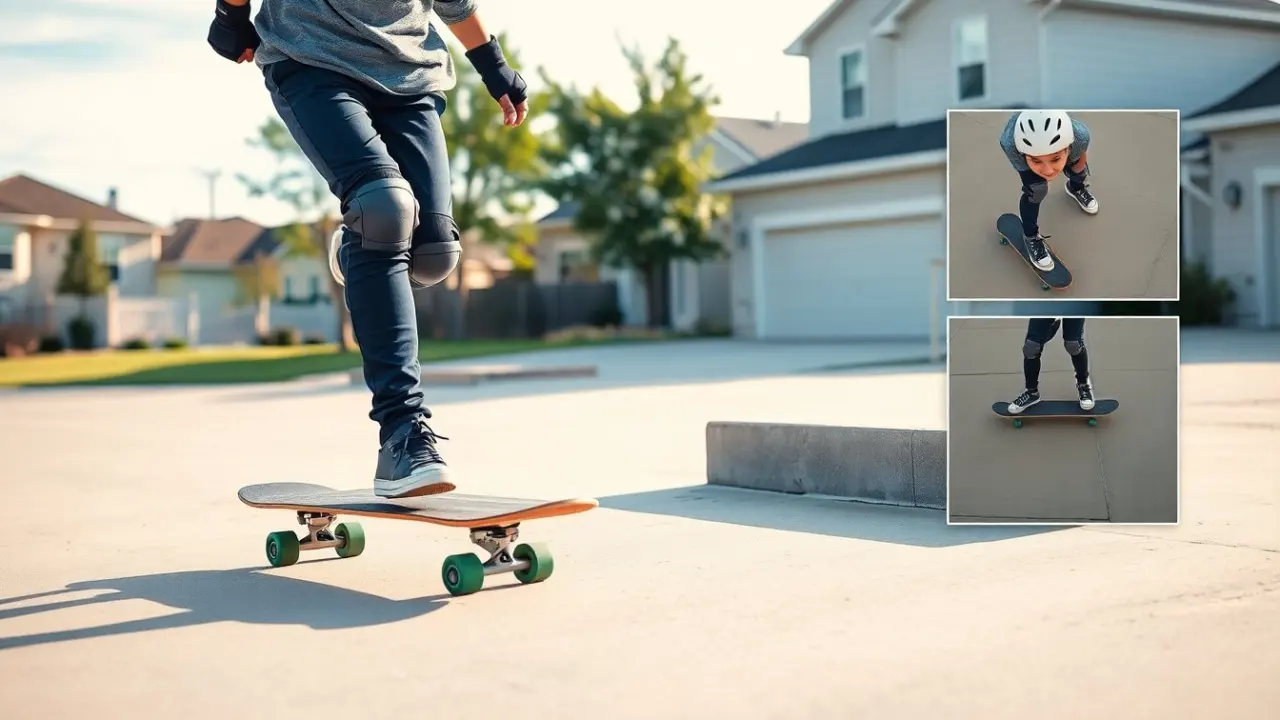
Riders should start on a low ledge about knee height. Approach the ledge at a moderate speed. Rider should ollie or ride onto the ledge with both trucks centered. Keep weight evenly distributed to lock into a 50-50 grind.
Key steps: spot the landing, pop or lift onto the ledge, level the board, and ride the grind. Rider should look at the exit point, not the wheels. This focus helps with balance.
If the board slips, rider should grit the wheels with light pressure and shift knees to control slide. Use wax sparingly on high-friction spots. When exiting, bend the knees and shift weight forward to roll away cleanly.
Start with short grinds and low speeds. Increase distance as confidence grows. Practice committing to the lock-in: hesitation causes slips. Mastering this move opens access to more easy skateboard tricks on small obstacles.
Technical pointers: aim to land with the bolts centered over the ledge so both trucks engage simultaneously; avoid landing with the weight too far back, which causes the tail to scrape and the grind to stall. If possible, practice on a ledge with a forgiving edge or a removable grind block to build confidence before moving to concrete surfaces.
Drills to improve success rate: 1) approach-and-lean repetitions — roll up, place both trucks on the ledge without grinding, and roll off to rehearse alignment; 2) low-commitment pop-ons — lightly pop up and immediately bail to get used to the board contacting the ledge; 3) short grind intervals — aim for 1–2 board lengths and increase gradually. After each attempt, check truck tightness and wheel condition; small equipment issues can make grinds inconsistent.
Mental and physical prep: rehearse clean exits by bending knees and looking to the landing; practice a steady breathing pattern before the approach to reduce tension; and always warm up with flat-ground ollies and manuals so the muscle memory for balance and pop is active. These steps tie together the skills needed for clean 50-50 grinds and support steady progress through easy skateboard tricks.