Dynamic hip mobility exercises help people move with less pain and more power. This short guide shows quick checks and safe drills. It lists simple routines that a person can do in ten minutes. Each sentence gives clear steps and outcomes. The reader will learn which tests to run and which moves to use. The focus stays on practical results and steady progress.
Key Takeaways
- Dynamic hip mobility exercises enhance range of motion and reduce strain on knees and lower back, improving overall movement quality.
- Perform quick self-assessments like the forward step, deep squat, and single-leg hinge tests to identify hip mobility limitations.
- Start dynamic hip mobility exercises with a warm-up and progress gradually while avoiding pain and maintaining balanced training.
- Incorporate activation drills such as leg swings, walking lunges, and hip flexor flossing to prepare the front hip muscles for movement.
- Use posterior chain and rotational exercises like hip hinges, the World’s Greatest Stretch, and rotational lunges to improve control during bending and twisting.
- Lateral and load-bearing movements including lateral lunges, 90/90 transitions, and Cossack variations develop side-to-side hip strength and mobility essential for stability and power.
Why Dynamic Hip Mobility Matters For Performance And Daily Life
Dynamic hip mobility exercises improve range of motion and joint control. Improved hip motion reduces strain on the knees and low back. Athletes gain better sprinting, jumping, and change-of-direction power. Workers and parents gain easier bending, lifting, and stair climbing. The hips transfer force between the upper and lower body during most tasks. When a hip moves well, a person uses less effort and feels less pain. The body then performs tasks with more stability and less injury risk. Beyond force transfer, dynamic hip mobility helps maintain efficient movement patterns as we age, preserves tissue health by encouraging fluid movement through multiple planes, and supports balanced strength across surrounding muscles like the glutes, hamstrings, and adductors.
Quick Self-Assessment: How To Know If Your Hips Need Work
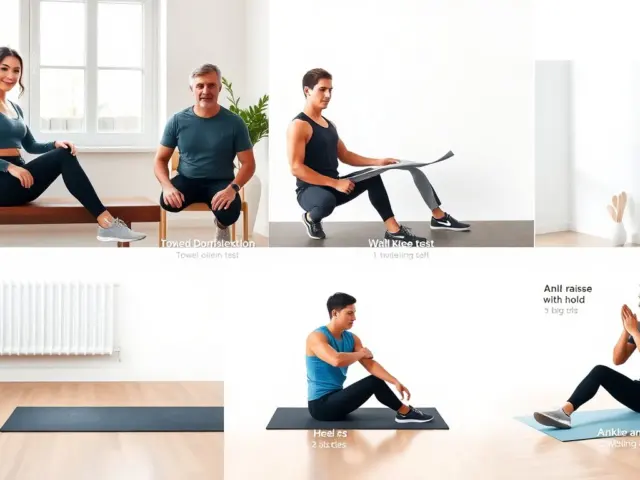
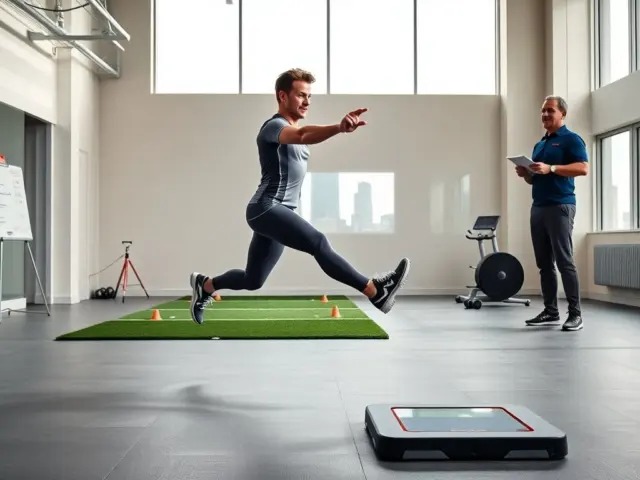
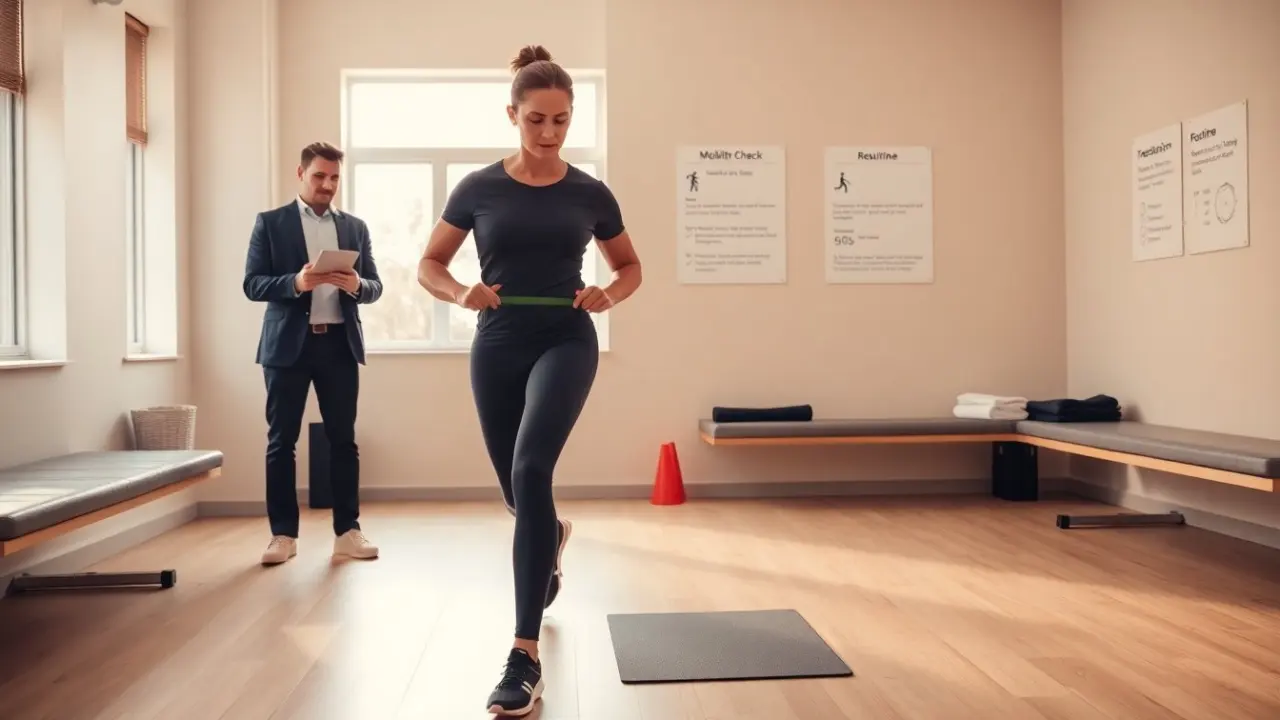
The reader can test hips in three simple checks. First, the forward step test: step forward and note tightness or pinching in the front of the hip. Second, the deep squat test: squat to a comfortable depth and check for knee collapse or back rounding. Third, the single-leg hinge test: hinge on one leg and watch for loss of balance or hip drop. If any test shows limited range or pain, dynamic hip mobility exercises can help. These checks guide which drills to prioritize. To make assessments more actionable, record which side or movement felt limited, note whether the restriction is a mobility (stiffness) or stability (control) issue, and repeat the same tests weekly to track improvement. If a test reproduces sharp pain rather than tightness, stop and consider professional evaluation before progressing.
Principles For Safe, Effective Dynamic Hip Work
Start with a brief warm-up that raises heart rate and increases blood flow. Move the hip through controlled ranges before adding speed. Focus on pain-free positions and gradual progression of load. Use balanced work for both sides to avoid asymmetry. Breathe and brace the core during higher-load moves. Rest briefly between sets and stop if sharp pain appears. Track progress with the same self-assessments used earlier. These rules make dynamic hip mobility exercises safer and more effective. Practical application: begin sessions with 3–5 minutes of general movement (light cardio, dynamic leg swings), then layer 6–8 minutes of targeted drills. Progress each drill by increasing range, reps, or by adding a light external load once control is consistent. Common mistakes to avoid include using momentum to force ROM, neglecting the weaker side, and skipping thoracic mobility that often limits hip function; correct these by slowing the movement, using unilateral variations, and adding rotational drills for the spine.
6 Essential Dynamic Hip Mobility Exercises
The following drills fit a ten-minute routine. Each drill focuses on a role: activation, posterior chain, or lateral control. Perform each drill for 30–60 seconds or 8–12 reps, depending on the movement. Repeat two rounds for a ten-minute flow. Mix and match drills as needed based on the quick self-assessment. These six moves build motion, control, and load tolerance. Below are specific cues, progressions, and easier regressions to help tailor the routine to beginners or those returning from injury.
Activation And Anterior Chain Movements (Leg Swings, Walking Lunges, Hip Flexor Flossing)
Leg swings prepare the hip for forward and backward motion. Stand tall, swing one leg forward and back with control. Use a support for balance and keep the torso upright; increase height gradually as control improves. Walking lunges build single-leg strength and stretch the hip flexor. Step forward, lower with a straight torso, then stand. Add a twist toward the front leg to include thoracic rotation when ready. Hip flexor flossing uses a band or hand pressure to glide the front tissues while moving the leg. Move the hip into gentle extension and return. For regressions, perform stationary lunges or assisted leg swings; for progressions, add a walking tempo or light resistance. Key cues: keep the pelvis neutral, engage the glute on the front leg, and avoid pushing into sharp anterior hip pain.
Posterior Chain And Rotation Movements (Hip Hinges, World’s Greatest Stretch, Rotational Lunges)
Hip hinges teach posterior chain control and hip hinge patterning. Hinge at the hips with a neutral spine and move slowly. Begin with bodyweight Romanian deadlifts or hinge to a bench to learn the pattern before adding load. The World’s Greatest Stretch combines a lunge, thoracic rotation, and hamstring reach. Reach the arm up to rotate the torso while keeping the hips square. Use this as a mobility-to-stability flow: move through the sequence dynamically to connect hip extension with upper-body rotation. Rotational lunges train the hip to move under load while rotating the upper body. Start with shallow steps and increase depth only when the hip and core remain stable. These dynamic hip mobility exercises improve control during bending and twisting tasks; if balance is an issue, perform them next to a wall or chair for support.
Lateral And Load‑Bearing Movements (Lateral Lunges, 90/90 Transitions, Cossack Variations)
Lateral lunges load the hip in side-to-side motion. Step wide, sit back into the working hip, and keep the chest up. Emphasize pushing the weight through the heel and maintaining a straight line from knee to toes when possible. 90/90 transitions train internal and external rotation under load. Sit with both knees at right angles and shift the hips through each position; perform slowly to build joint awareness and gradually increase speed. Cossack variations increase single-leg strength and end-range mobility. Work within a pain-free range, using a heel raise or support to reduce ankle or calf limitations if needed. These dynamic hip mobility exercises help with cutting, side-stepping, and deep positional control. They also reveal side-to-side differences to address. As a practical session plan, pick two activation drills, two posterior/rotational drills, and two lateral drills to form a balanced 10-minute routine, and reassess weak links weekly to adjust exercise selection.