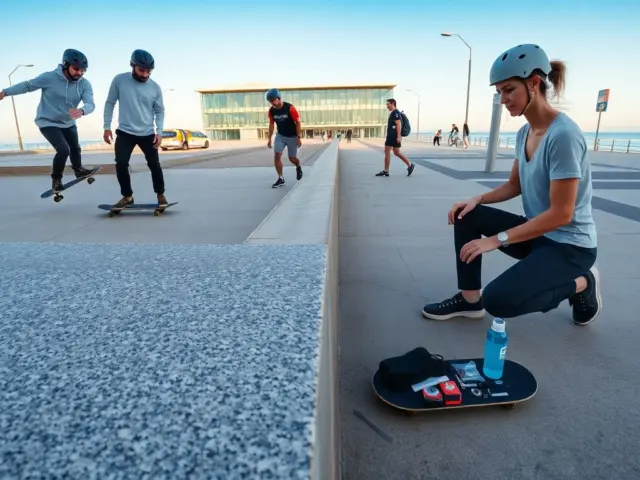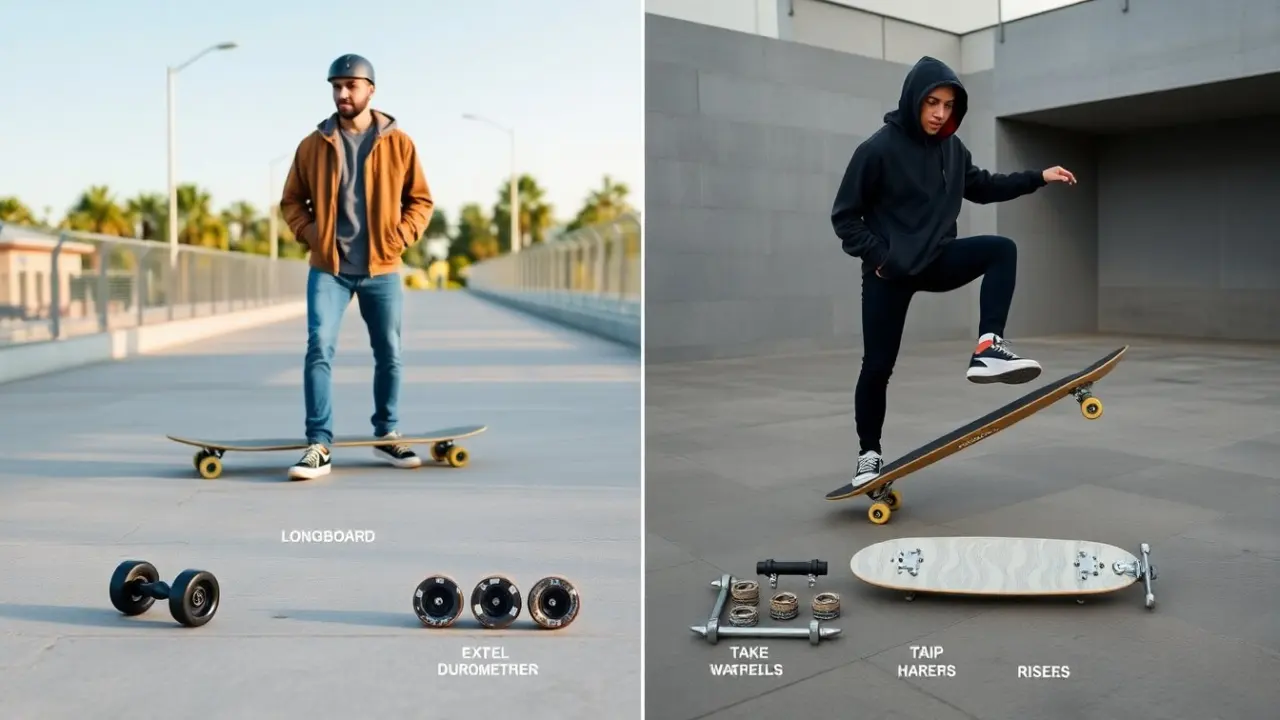
The longboard vs skateboard choice shapes every rider’s goals and daily experience. Beyond a simple genre label, it affects route options, skill progression, storage and transport, and the kinds of maneuvers you can practice. This guide compares longboard vs skateboard in clear, practical terms so you can match equipment to skill, commute, and style. Read on for a focused comparison of purpose and feel, actionable guidance on picking the right board for your riding goals, and a closer look at the components that most influence performance and safety.
Key Takeaways
- The longboard vs skateboard choice depends primarily on your riding goals: longboards favor speed, stability, and comfortable cruising, while skateboards favor maneuverability, pop, and technical trick work.
- Longboards typically have longer decks, larger softer wheels, and reverse-kingpin trucks for stability and smoother rolling—ideal for commutes, carving, and downhill; skateboards have shorter decks, smaller harder wheels, and standard trucks for quick flicks and park riding.
- Deck length, shape, and flex plus wheel diameter and durometer heavily influence how a board feels; choose components based on stance, terrain, and the types of moves you plan to do.
- Component upgrades (wheels, trucks, bearings, risers, grip) are a practical way to refine a complete board incrementally as your needs change.
- Test ride when possible, prioritize fit (deck width vs shoe size and stance), and follow a simple maintenance routine—clean bearings, check hardware, and replace worn parts—to keep any board safe and responsive.
- Consider daily distance, storage constraints, progression goals (learning to cruise vs learning tricks), and local terrain when deciding between longboard vs skateboard to ensure the board matches your lifestyle.
How Longboards And Skateboards Differ: A Quick Comparison
Riders compare longboard vs skateboard by looking at purpose, shape, and how each board responds to inputs. Longboards are built for relaxed, stable rides over longer distances and higher speeds: they usually have elongated decks that increase wheelbase and stability, larger-diameter and softer wheels that smooth rough pavement and roll over small obstacles, and trucks—often reverse-kingpin—that favor predictable carving and stability at speed. Skateboards are compact and responsive: shorter, pop-friendly decks with pronounced concave enable technical footwork and tricks; smaller, harder wheels accelerate quickly and make flip tricks and grinds easier; and standard kingpin trucks are tuned for tight turning and secure truck snaps for tricks.
Beyond raw hardware, the riding experience differs: longboards reward subtle weight shifts and carving lines, making them ideal for commuting, relaxed cruising, and downhill where stability and control at speed matter. Skateboards reward quick, explosive movements—popping for ollies, using the board as a tool for technical maneuvers, and navigating skate parks or tight urban spots. Weight, portability, and storage also differ: longboards generally carry more momentum and can be heavier to carry, while skateboards are smaller to stash under a desk or in a backpack. Ultimately, the longboard vs skateboard choice comes down to the environment you ride in and the motions you want to practice—the steady flow and speed of cruising versus the precision and pop of trick riding.
Which Board Matches Your Riding Style And Goals
Match your board to how and where you plan to ride. For daily commuting on mixed pavement, a longboard that prioritizes comfort, stability, and wheel clearance will reduce fatigue and make obstacles less jarring. Look for a board with a longer wheelbase and softer, larger wheels; these choices translate into smoother rolling and predictable cornering. If your goal is downhill speed or longer-distance pushing, choose a stiffer deck with secure foot platforms and trucks tuned for stability.
If your goal is learning tricks, practicing manuals, or skating parks and ledges, a skateboard is the better fit: compact dimensions help with flip tricks and technical maneuvers, and a pronounced deck concave helps lock your feet in during combos. Park riders often prefer firmer wheels that respond reliably on smooth surfaces and a medium concave that balances flip response with foot control. For beginners, a longboard can offer an easier balance platform for learning basic pushing and carving, while a skateboard teaches pop and timing that are essential for street and park progression.
Consider lifestyle constraints too: if you carry your board on public transit or fit it in small storage, a short skateboard or a compact, travel-friendly longboard may be necessary. If budget is a concern, compare complete boards and prioritize a good deck and wheels; plan component upgrades as your skills and needs evolve. Think about progression—if you expect to shift from commuting to tricks (or vice versa), weigh the cost and practicality of swapping decks or building a custom setup. The longboard vs skateboard decision should reflect your preferred routes, how quickly you want to progress, and how you plan to use the board day to day.
Performance Components That Matter: Decks, Wheels, Trucks
Decks set the stage for ride behavior. Length, width, concave, and flex all affect stability, pop, and turning. A longboard deck’s length and longer wheelbase give stability and smoother directional control, while a stiffer construction resists wobble at speed. Skateboard decks intentionally keep wheelbase shorter and incorporate pop-friendly ply layouts and concave shapes to improve flip tricks and edge control. Choose deck width to match your shoe size and stance: too narrow reduces balance; too wide makes flips harder.
Wheels determine ride smoothness, grip, and acceleration. Diameter influences rollover ability and top-end speed—larger diameters maintain momentum and handle cracks better; smaller diameters accelerate quicker and reduce weight for tricks. Durometer (hardness) controls traction and slide behavior: softer wheels provide grip and a forgiving ride on rough surfaces, while harder wheels are faster on smooth surfaces and slide more predictably during tricks. For mixed-terrain commuting, choose larger, softer wheels; for skatepark or street tricks choose smaller, harder wheels.
Trucks translate rider input into turning and stability. Reverse-kingpin trucks are common on longboards for predictable carving and stability at higher speeds. Standard kingpin trucks used on skateboards allow tighter turning and reliable responses for technical movements and grinds. Hanger width should match deck width to keep truck leverage balanced. Bearings and hardware complete the rolling system: clean, quality bearings reduce friction and improve roll feel; riser pads improve clearance and reduce wheel bite; and appropriate grip tape ensures foot purchase without over-gripping the shoes. Small changes—softer bushings for easier turning, a slightly narrower truck for quicker response, or a stiffer deck for high-speed stability—can significantly change how a board behaves, so match each component deliberately to your riding style.
Buying Checklist: Choose, Fit, And Maintain Your Board
Choose a board that matches intended use and your physical fit. Confirm deck width fits the rider’s shoe size and stance; a simple rule is to align shoulder and deck widths for balance but prioritize comfort. Measure deck width and wheelbase and compare to your stance preference before buying. Fit trucks and wheels to the deck for correct clearance—avoid wheel bite by checking wheel size vs deck/tuck geometry. When possible, test the board in person or demo similar setups to feel flex and turning characteristics.
Inspect component specifications: deck material and flex level for desired ride feel, wheel diameter and durometer for terrain compatibility, and truck type and hanger width for turning behavior. For beginners or budget buyers, start with a well-reviewed complete board targeted to your riding type; serious riders can plan component upgrades such as higher-grade bearings, different wheels, or upgraded trucks to refine handling. Maintain your board by cleaning bearings, checking and tightening hardware, replacing worn wheels and grip tape, and storing the board in a dry, shaded place to avoid heat and moisture damage. Set trucks to preferred tightness gradually—small adjustments can have a big effect—and rotate wheels periodically to even wear. Following these steps makes the longboard vs skateboard purchase less overwhelming and helps you ride with more confidence and fewer surprises.